Buscar en este blog

domingo, 16 de agosto de 2015

DIFFERENCE BETWEEN IMAGE AND PICTURE

PICTURE AND IMAGE

PICTURE
    A visual representation of something, such as a person or scene, produced on a surface, as in a photograph, painting, etc

IMAGE
    An image of an object, person, scene, etc, in the form of a print or slide recorded by a camera on photosensitive material. It is also a mental representation.


sábado, 15 de agosto de 2015

THE KISS IN TIMES SQUARE


THE KISS IN TIMES SQUARE

 
V-J Day in Times Square is a photograph by Alfred Eisenstaedt Alfred that portrays an American sailor kissing a woman in a white dress on Vitory over Japan DayVictory  (V-J Day) in Times Square in New York City, on August 14, 1945. The photograph, taken with a Leica IIIa camera, was published a week later in Life magazine among many photographs of celebrations around the United States. Eisenstaedt was photographing a spontaneous event that occurred in Times Square as the announcement of the end of the war on Japan was made by U.S. President Harry S. Truman at seven o'clock.

The photograph is known under various titles, such as V-J Day in Times SquareV-Day, and The Kiss.

Because Eisenstaedt was photographing rapidly changing events during the celebrations he did not have an opportunity to get the names and details. The photograph does not clearly show the faces of either person involved in this embrace and several people have claimed to be the subjects. The photograph was shot just south of 45th Street looking north from a location where Broadway and Seventh Avenue converge. Soon after ward, throngs of people crowded into the square and it became a sea of people.

Edith Shain wrote to Eisenstaedt in the late 1970s claiming to be the woman in the picture. In August 1945, Shain was working at Doctor's Hospital in New York City as a nurse when she and a friend heard on the radio that World War had ended. They went to Times Square where all the celebrating was and as soon as she arrived on the street from the subway, the sailor grabbed her in an embrace and kissed her. She related that at the time she thought she might as well let him kiss her since he fought for her in the war. Shain did not claim that she was the woman in the white dress until many years later when she wrote to Eisenstaedt. He notified the magazine that he had received her letter claiming to be the subject

George Mendonça of Newport, Rhode Island, on leave from the USS The Sullivans (DD-537), was watching a movie with his future wife, Rita, at Radio City Music Hall when the doors opened and people started screaming the war was over. George and Rita joined the partying on the street, but when they couldn't get into the packed bars decided to walk down the street. It was then that George saw a woman in a white dress walk by and took her into his arms and kissed her, "I had quite a few drinks that day and I considered her one of the troops—she was a nurse."[In one of the four pictures that Eisenstaedt took, Mendonça claims that Rita is visible in the background behind the kissing couple.

In 1987, George Mendonça filed a lawsuit against Time Inc. in Rhode Island state court, alleging that he was the sailor in the photograph.


jueves, 13 de agosto de 2015

TYPES OF HUMOR

TYPES OF HUMOR


Black humor: Humor dealing with the unpleasant or dark side of life (death, people's problems)

Practical humor: A joked played on someone to embarrass them and amuse others.

Dry humor: Amusing without appearing to be so, quietly ironic.

Satire humor: Showing the foolishness or evil of a person, organisation or practice, in an amusing way.

Racist humor: Showing dislike or intolerance of people of different races.

Sexist humor: Unfairly dismissive of the opposite sex; showing them as stupid or inferior.

Sick humor: Unnaturally, unhealthily cruel or morbid, this kind of humor is unsophisticated, often quite juvenile and offensive.

Slapstick humor: Humorous acting that depends on fast, sometimes violent actions.

Dirty humor: Concerned with sex, sometimes in an unpleasant way.

miércoles, 12 de agosto de 2015

THE PERSEIDS

THE PERSEIDS

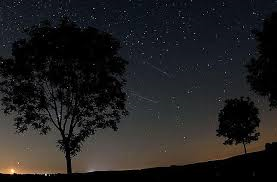
The Perseids are a prolific meteor showwer associated with the comet Swift-Tuttle. The Perseids are so called because the point from which they appear to come, called the radiant, lies in the constellation Perseus. The name derives in part from the word Perseides, a term found in Greek mythology referring to the sons of Perseus.

The shower is visible from mid-July each year, with the peak in activity between 9 and 14 August, depending on the particular location of the stream. During the peak, the rate of meteors reaches 60 or more per hour. They can be seen all across the sky; however, because of the shower’s radiant in the constellation of Perseus, the Perseids are primarily visible in the Northern Hemisphere. As with many meteor showers the visible rate is greatest in the pre-dawn hours, since more meteoroids are scooped up by the side of the Earth moving forward into the stream, corresponding to local times between midnight and noon.


martes, 11 de agosto de 2015

ARTÍCULO DETERMINADO CON NOMBRES PROPIOS

USO DEL ARTÍCULO DETERMINADO CON NOMBRES PROPIOS EN INGLÉS


Lo habitual es no utilizar el artículo determinado con nombres propios

Mr. Ward
Dr. Smith
Mrs. Rowlie
California
Wales
Spain
Charles

Pero hay excepciones

Títulos

The Duke of Wellington
The King of Spain
The Prince of Wales

Mares

The Atlantic
The Pacific
The Mediterranean

Cordilleras

The Pyrenees
The Alps
The Himalayas

Ríos

The Mississippi
The Avon
The Nile
The Thames

Islas

The Falklands
The Canaries
The Bahamas

Al referirse a determinado grupo

The Smiths
The Wards

Al referirse a alguien que sobresale

The Geoffrey Archer
The Callas

Al referirse a una obra de arte

The Picasso
The Rubens

Nombres comunes convertidos en propios por importancia

The National Gallery
The Big Ben
The British Museum


lunes, 10 de agosto de 2015

ADVICE AND ADVISE DIFFERENCE

ADVICE Y ADVISE


ADVICE: Es el sustantivo, significa "consejos", pues el singular es A PIECE OF ADVICE, significa "un consejo"
Dar un consejo es: TO GIVE A PIECE OF ADVICE
Seguir un consejo es: TO TAKE A PIECE OF ADVICE

TO ADVISE:  Es el verbo, significa aconsejar.


domingo, 9 de agosto de 2015

ARTÍCULO INDETERMINADO O INDEFINIDO EN INGLÉS

A O AN

  • EL ARTÍCULO INDETERMINADO O INDEFINIDO (EN INGLÉS)

    El artículo indeterminado en inglés (A,An) es invariable en género, esto significa que se utiliza en masculino y en femenino indistintamente.
    Carece de plural, de modo que para indicar la idea de "unos", "unas" se utiliza el adjetivo indefinido "some".
    Se usa A (pronunciado / ə / delante de palabras que empiecen por consonante, a book, a pencil, a brush.
    Se usa AN (pronunciado /ən/ delante de palabras que empiecen por vocal o por h muda , an actor, an umbrela, an hour.
    Pero se usa A delante de palabras que empiezan por u pronunciada /ju:/, a university, a unión, a uniform

martes, 4 de agosto de 2015

INSTAGRAM

INSTAGRAM

Instagram, founded in 2010, derived its name from the combination of “instant camera” and “telegram.” Starting with one million monthly users, the photo-sharing app found itself with 100 million uploaded photos by July 2011 and 10 million users in September of that same year. In April 2012, the company announced passing the 30 million user mark. That same month, Facebook took note of Instagram's growth and bought the app for $1 billion, its third largest acquisition to date. From that point on, use of Instagram skyrocketed. It reached 80 million monthly users after the acquisition and nearly doubled that to 150 million monthly uses by the end of 2013. 


domingo, 2 de agosto de 2015

THE CAVERN

The Beatles’ final Cavern Club show

After nearly 300 performances at Liverpool's Cavern Club, at 3rd. August 1963 was The Beatles' final show at the venue. The Beatles were paid £300, which was quite a bit of money then, and the audience was restricted to 500. The admission price was 10 shillings. All the staff had to be paid, and the other groups on the bill too, there was no profit that night.
Tickets for the final show had gone on sale at 21 July at 1.30pm, and sold out within 30 minutes.

The show lasted from 6-11.30pm. Also on the bill were The Escorts, The Merseybeats, The Road Runners, Johnny Ringo and the Colts, and Faron's Flamingos.

jueves, 30 de julio de 2015

NOMBRAR UNA CALLE EN INGLÉS

VOCABULARY

CAN YOU TELL ME YOUR ADDRESS?

Es muy curioso lo que pasa en Londres con los nombres de las calles. Cambian a la menor curva que aparece, pero si la curva es muy pronunciada mantiene el nombre. Por otro lado hay infinidad de palabras que definen a una calle, dependiendo del tamaño y localización. Aquí van algunas de ellas.

STREET
VALE
HILL
ROAD
VIEW
PLACE
TERRACE
MEWS
GATE
CRESCENT
PROMENADE
AVENUE
BROADWAY
RISE
WALK
LANE
PATH
WAY
ARCH
GROVE
ALLEY
PARK
GARDENS


miércoles, 29 de julio de 2015

IDIOMS

IDIOM

TO BUMP INTO: Encontrarse con alguien por casualidad

They were glad to bump into each other there.


COMPOSITION (WRITING)

COMPOSITION (WRITING)

 
COMPOSITION (WRITING)
PARA DAR UN PUNTO DE VISTA

In my opinion....................................
In my view.............................................
Personally..........................................
As far as I am concerned...................
From my point of view......................
The first thing that comes to my mind when I think about.....................
PARA EXPRESAR REALIDADES
 
As a matter of fact........................
In fact............................................
Actually.........................................
PARA DAR EJEMPLOS
For example.....................................
For instance......................................
Such as..............................................
PARA EXPRESAR ALGO DE OTRO MODO
That is................................
In other words..................................
PARA ESTABLECER UN CONTRASTE

However..............................................
Nevertheless........................................
On the other hand................................
Although...............................................
In spite of.............................................
Despite.................................................
PARA AÑADIR INFORMACIÓN
Apart from this....................................
Moreover.............................................
In addition............................................
PARA EXPRESAR CAUSAS O RESULTADOS
Because of this.......................................
For this reason........................................
That is why..............................................
Therefore.................................................
As a result of............................................
Consequently............................................
So..............................................................
PARA MODIFICAR LO QUE ESTAMOS DICIENDO
 
At least............................................................
In particular.....................................................
More or less....................................................
Above all........................................................
Basically.........................................................
PARA CONECTAR EL TIEMPO
First of all.......................................................
Next................................................................
In the meantime..............................................
After that.........................................................
Finally.............................................................
While..............................................................
In the end........................................................
PARA FINALIZAR
In short...........................................................
In conclusion..................................................
On the whole..................................................
To sum up.......................................................


lunes, 27 de julio de 2015

IDIOMS

IDIOM

 
"I ACED MY TEST",
 
Significa que has hecho un examen brillante


domingo, 26 de julio de 2015

WHO STOLE THE COOKIES FROM THE COOKIE JAR?

WHO STOLE THE COOKIES FROM THE COOKIE JAR?


Se trata de un juego de niños que es muy útil para mejorar la pronunciación.


KING HENRY VIII'S WIVES

KING HENRY VIII'S WIVES

Catherine of Aragón
Anne Boleyn's
Jane Seymour
Anne of Cleves
Catherine Howard
Katherine Parr


sábado, 25 de julio de 2015

CAMINO DE SANTIAGO

CAMINO DE SANTIAGO

The Camino de Santiago, also known by the English names Way of St. James, St. James's Way, St. James's Path, St. James's Trail, Route of Santiago de Compostela,and Road to Santiago, is the name of any of the pilgrimage routes (most commonly the Camino Francés or French route) to the shrine of the apostle St. James the Great in the Cathedral of Santiago de Compostela in Galicia in northwestern Spain, where tradition has it that the remains of the saint are buried. Many take up this route as a form of spiritual path or retreat for their spiritual growth.


IDIOMS

IDIOM

 
"I EXPECTED BETTER OF YOU"
 
Significa "Yo esperaba más de ti"

viernes, 10 de julio de 2015

IDIOMS

"IT BE WORH YOUR WHILE"

 
Significa "merece la pena", "vale la pena".
 
It may be worth your while meet a teacher to discuss the assessment.
 
 
It will be worth your while to take a stroll along the river.

martes, 7 de julio de 2015

ALICE IN WONDERLAND

Five fun facts about Alice:

  1. The novels were banned in China in 1931, on the grounds that “animals should not use human language…”
  2. The tree that is said to have inspired the Cheshire Cat’s tree stands in the garden behind Alice’s home at Christ Church College, Oxford.
  3. Lewis Carroll suffered from a rare neurological disorder that causes strange hallucinations and affects the size of visual objects, which can make the sufferer feel bigger or smaller than they are – a huge theme of the book. The disease, first discovered by English psychiatrist John Todd in 1955, was later named Alice in Wonderland Syndrome. It is also known as Todd’s syndrome.
  4. Dinah (Alice’s cat) has become a popular literary cat. Not directly linked but if you like cats why not visit Lady Dinah’s Cat Emporium?
  5. Kathryn Beaumont voices Alice in the Disney animated film. She also voices Wendy Darling in Peter Pan.

viernes, 3 de julio de 2015

QUESTION TAGS

QUESTION TAGS

Question tags son  frases  que se colocan al final de una oración afirmativa o negativa y que generalmente tienen como objetivo confirmar o negar el contenido de la frase misma. Es el equivalente al ¿verdad?español o al ¿no? más utilizado en países de América.

IMPORTANTE

1-      Las question tags se utilizan con verbos auxiliares.
2-      Cuando la frase está en afirmativa la question tag se escribirá en negativo.
3-      Cuando la frase está en negativa la question tag se escribirá en afirmativo.

Ahora veamos los distintos casos:

FRASES AFIRMATIVAS CON VERBO TO BE EN PRESENTE

It's a beautiful flower, isn't it? (Es una flor hermosa, ¿no?)
Karen  is very thin, isn't she? (Karen está muy delgada, ¿verdad?)
You are really tired, aren't you? (Estás muy cansado, ¿no?)
They're very friendly people, aren't they? (Son personas muy sociables, ¿no?)
You are coming tomorrow, aren't you? (Vas a venir mañana, ¿verdad?)
Keith's writing the report now, isn't he? (Keith está escribiendo el informe en estos momentos, ¿no?)

I'm late, aren't I? (Llego tarde, ¿no?)
I'm arriving late at night, aren't I? (LLegaré tarde por la noche, ¿no?)

(Estos dos últimos casos se dan sólo en Inglés Americano)


FRASES NEGATIVAS CON VERBO TO BE EN PRESENTE.

I'm not late, am I? (No llego tarde, ¿no?)
It isn't a beautiful day, is it? (No es una hermosa flor, ¿verdad?)
Karen is not very thin, is she? (Karen no está muy delgada, ¿no?)
You aren't really tired, are you? (No estás muy cansado, ¿verdad?)
They aren't very friendly people, are they? (No son personas muy sociables, ¿no?)
You aren't coming tomorrow, are you? (No vas a venir mañana, ¿no?)
Keith isn't writing the report now, is he? (Keith no está escribiendo el informe en estos momentos, ¿no?)


FRASES AFIRMATIVAS CON VERBO TO BE EN PASADO.

It was a beautiful day, wasn't it? (Fue un día hermoso, ¿verdad?)
Karen was angry, wasn't she? (Karen estaba enfadada, ¿no?)
You were really tired, weren't you? (Estabas muy cansado, ¿verdad?)
You were studying at 6, weren't you? (Estuviste estudiando a las 6, ¿no?)
He was flying when I phoned, wasn't he? (Estaba volando cuando llamé, ¿no?)


FRASES NEGATIVAS CON VERBO TO BE EN PASADO.

It wasn't a beautiful day, was it? (No fue un día hermoso, ¿no?)
Karen wasn't angry, was she? (Marta no estaba enfadada, ¿no?)
You weren't really tired, were you? (No estabas muy cansado, ¿verdad?)
You weren't studying at 6, were you? (No estuviste estudiando a las 6, ¿no?)
He wasn't flying when I phoned, was he? (No estaba volando cuando llamé, ¿no?)

FRASES AFIRMATIVAS CON OTROS VERBOS.

You went to Kent in 2010, didn't you? (Fuiste a Kent en 2010, ¿no?)
Joan has worked a lot, hasn't she? (Joan ha trabajado mucho, ¿no?)
Mia will be there in ten minutes, won't she? (Mía estará allí en diez minutos, ¿verdad?)
Tom should pass his exam, shouldn't he? (Tom debería aprobar su examen, ¿no?)
You can play the violin, can't you? (Sabes tocar el violín, ¿no?)
He could find a job, couldn't he? (Pudo encontrar trabajo, ¿verdad?)

FRASES CON LET’S

Let's go out for a walk, shall we? (Salgamos a dar una vuelta, ¿qué te parece?)
Let's study tomorrow morning, shall we? (Estudiemos mañana por la mañana, ¿sí?)

FRASES EN IMPERATIVO

Open the door, will you? (Abre la puerta, ¿sí?)
Don't smoke in this room, will you? (No fumes en esta habitación, ¿de acuerdo?)