martes, 15 de diciembre de 2015

domingo, 1 de noviembre de 2015
ROASTED CHESTNUTS
ROASTED CHESTNUTS
In Spain there are other typical celebration for the night of
October
31. Magosto in the northwest of the Iberian Peninsula and the
Castanyada in Catalonia are the key to start the month of
November.
Magosto is celebrated mainly in the northwest of Spain,
although it is also celebrated in other places, such as
Caceres, Zamora, even in Portugal.
This festival has its origins in Celtic rituals, the way
to winter and collecting chestnuts. In the celebration never
lack fire troasted chestnuts from a fire.
In other regions also celebrate this holiday, always with
chestnuts involved, but with different names. In Catalonia
for example is celebrated known as Castanyada where besides
eating roasted chestnuts, other typical dishes such as panellets
and sweet potatoes are eaten accompanied by Muscat.
In the Basque Country the name is Gaztainerra, in Cantabria
called Magosta, in Asturias is known as Amagüestu, here the
chestnuts are accompanied by sweet cider. But all have one
thing in common: chestnuts.
domingo, 18 de octubre de 2015
"AL MAL TIEMPO BUENA CARA" (IDIOM)
"AL MAL TIEMPO BUENA CARA" (IDIOM)
Hay varias formas de expresar esta situación en inglés, tales como
Turn lemons into
lemonade
Put
a brave face on
When
life give you lemon make lemonade
When
the going gets tough, the tough get going
(a
carne de lobo, diente de perro)
domingo, 4 de octubre de 2015
JOHN LENNON EN ALMERÍA
JOHN LENNON IN ALMERÍA
En
Septiembre de 1966 John Lennon pasó una temporada en Almería,
exactamente en el Municipio de Palomares, en la localidad de
Carboneras.
El
motivo por el cual estuvo allí fue filmar la película “Como gané
la guerra”, una sátira acerca de las películas bélicas.
Durante
su estancia allí compuso “Strawberry Fields Forever”
JOHN LENNON IN ALMERIA

In September 1966 John Lennon spent some days in Almeria, exactly in the town of Palomares , in the village of Carboneras .

The reason why he was there was to shoot the film " How I Won the War " , a satire about war movies .

Meanwhile he was there he wrote "Strawberry Fields Forever "

martes, 29 de septiembre de 2015
SUPER MARIO BROSS
SUPER MARIO BROSS
Super
Mario Bros,celebrate today, 29th September his 30th birthday and
queue a wave of nostalgia across the world…
What
was your first video game? Odds are it involved everyone’s
favourite Italian plumber!.
Staff
at life Science Centre in Newcastlewere happy with custumes
to mark the anniversary of this beloved part of gaming culture.
Whether
your childhood was shaped by Mario Bros or Mario Kart, gaming fans
will find that they can indulge in plenty of playable nostalgia
before the Game On 2.0 exhibition ends on 3 January 2016 –
controllers at the ready!

domingo, 27 de septiembre de 2015
HARVEST FESTIVAL
Harvest Festival
Every year in UK it is celebrated a Harvest Festival in schools and churches. Do you know why?
Harvest Festival is a celebration of the food grown on the land.
Thanksgiving ceremonies and celebrations for a successful harvest are both worldwide and very ancient. In Britain, people have given thanks for successful harvests since pagan times. They celebrate this day by singing, praying and decorating churches with baskets of fruit and food in a festival known as 'Harvest Festival', usually during the month of September.
Harvest festivals are traditionally held on or near the Sunday of the Harvest Moon. This is the full Moon that occurs closest to the autumn equinox (about September 23). In two years

martes, 1 de septiembre de 2015
HOMOPHONES
HOMOPHONES
There are some words
that have the same pronunciation, they are
called HOMOPHONES
/hɪə/ here, hear
/rɑɪt/ write, right
/wɛə/ wear, where
/si:/ see, sea
/ɑɪ/ I, eye
/ɚɛ/ there, their
/nəʊ/ know, no
/bɑɪ/ buy, by
/fɔ:/ four, for
/tu:/ too, two
/ɑʊə/ hour, our
/sʌn/ sun, son
viernes, 28 de agosto de 2015
SUFIJOS PARA FORMAR SUSTANTIVOS EN INGLÉS
FORMAR NOMBRES CON
SUFIJOS
Para formar nombres a partir de verbos, se puede añadir sufijos TION y MENT
To adop adoption
To decorate decoration
To argue argument
To advertise advertisement
Para formar nombres a partir de adjetivos, se puede añadir sufijos ITY y NESS
Creative creativity
Responsible responsability
Happy happiness
Empty emptiness
Lo mejor es consultar el diccionario, porque al añadirlos se
producen cambios ortográficos se producen cambios ortográficos en
algunos casos.
miércoles, 26 de agosto de 2015
LOCH NESS MONSTER
NESSIE
Nessie, the Loch
Ness monster. Is famous all over the world. It was first reported in
the 14th century
but became famous in 1934 when Dr. H.K. Wilson took
a photograph in the lake.
Some people say that it is a fish, others a reptile and others think she is a dinosaur that has survived in
an underwater cave in the Scotyish lake.
Millions of tourists come to see Nessie every year and 4000 people claim they have seen it.

viernes, 21 de agosto de 2015
NEWSPAPER HEADLINES
NEWSPAPER HEADLINES

Here is a
brief guide to the “rules” by which English newspaper headlines
are written:
The article and the
verb to be are omitted.
The present tenses
are used to describe something which has happened, is happening, or
happens repeatedly.
When the present
continuous is used, the auxiliary verb to be is omitted.
To refer to the
future, the infinitive with to is used.
Passive sentences
are written without their auxiliary verbs.
There are a number
of words which are specifically used in headlines (e.g. quit is
often used instead of resign)
domingo, 16 de agosto de 2015
DIFFERENCE BETWEEN IMAGE AND PICTURE
PICTURE AND IMAGE
PICTURE
A visual representation of something, such as a person or scene, produced on a surface, as in a photograph, painting, etc
IMAGE
An image of an object, person, scene, etc, in the form of a print or slide recorded by a camera on photosensitive material. It is also a mental representation.

sábado, 15 de agosto de 2015
THE KISS IN TIMES SQUARE
THE KISS IN TIMES SQUARE
V-J Day in Times Square is a photograph by Alfred Eisenstaedt Alfred that portrays an American sailor kissing a woman in a white dress on Vitory over Japan DayVictory (V-J Day) in Times Square in New York City, on August 14, 1945. The photograph, taken with a Leica IIIa camera, was published a week later in Life magazine among many photographs of celebrations around the United States. Eisenstaedt was photographing a spontaneous event that occurred in Times Square as the announcement of the end of the war on Japan was made by U.S. President Harry S. Truman at seven o'clock.
The
photograph is known under various titles, such as V-J
Day in Times Square, V-Day,
and The
Kiss.
Because
Eisenstaedt was photographing rapidly changing events during the
celebrations he did not have an opportunity to get the names and
details. The photograph does not clearly show the faces of either
person involved in this embrace and several people have claimed to be
the subjects. The photograph was shot just south of 45th Street
looking north from a location where Broadway and Seventh Avenue converge.
Soon after ward, throngs of people crowded into the square and it
became a sea of people.
Edith
Shain wrote to Eisenstaedt in the late 1970s claiming to be the woman
in the picture. In
August 1945, Shain was working at Doctor's Hospital in New York City as
a nurse when she and a friend heard on the radio that World War had
ended. They went to Times Square where all the celebrating was and as
soon as she arrived on the street from the subway, the sailor grabbed
her in an embrace and kissed her. She related that at the time she
thought she might as well let him kiss her since he fought for her in
the war. Shain did not claim that she was the woman in the white
dress until many years later when she wrote to Eisenstaedt. He
notified the magazine that he had received her letter claiming to be
the subject
George
Mendonça of Newport, Rhode Island,
on leave from the USS The Sullivans (DD-537),
was watching a movie with his future wife, Rita, at Radio City Music Hall when
the doors opened and people started screaming the war was
over. George and Rita joined the partying on the street, but
when they couldn't get into the packed bars decided to walk down the
street. It was then that George saw a woman in a white dress walk by
and took her into his arms and kissed her, "I had quite a few
drinks that day and I considered her one of the troops—she was a
nurse."[In
one of the four pictures that Eisenstaedt took, Mendonça claims that
Rita is visible in the background behind the kissing couple.
In
1987, George Mendonça filed a lawsuit against Time Inc. in Rhode
Island state court, alleging that he was the sailor in the
photograph.

jueves, 13 de agosto de 2015
TYPES OF HUMOR
TYPES OF HUMOR
Black humor: Humor dealing with the unpleasant or dark side of life (death, people's problems)
Practical humor: A joked played on someone to embarrass them and amuse others.
Dry humor: Amusing without appearing to be so, quietly ironic.
Satire humor: Showing the foolishness or evil of a person, organisation or practice, in an amusing way.
Racist humor: Showing dislike or intolerance of people of different races.
Sexist humor: Unfairly dismissive of the opposite sex; showing them as stupid or inferior.
Sick humor: Unnaturally, unhealthily cruel or morbid, this kind of humor is unsophisticated, often quite juvenile and offensive.
Slapstick humor: Humorous acting that depends on fast, sometimes violent actions.
Dirty humor: Concerned with sex, sometimes in an unpleasant way.

miércoles, 12 de agosto de 2015
THE PERSEIDS
THE PERSEIDS
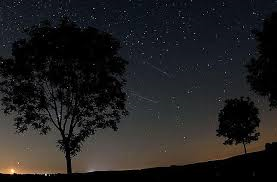
The shower is visible from mid-July each year, with the peak in activity between 9 and 14 August, depending on the particular location of the stream. During the peak, the rate of meteors reaches 60 or more per hour. They can be seen all across the sky; however, because of the shower’s radiant in the constellation of Perseus, the Perseids are primarily visible in the Northern Hemisphere. As with many meteor showers the visible rate is greatest in the pre-dawn hours, since more meteoroids are scooped up by the side of the Earth moving forward into the stream, corresponding to local times between midnight and noon.
martes, 11 de agosto de 2015
ARTÍCULO DETERMINADO CON NOMBRES PROPIOS
USO DEL ARTÍCULO DETERMINADO CON NOMBRES PROPIOS EN INGLÉS

Lo habitual es no
utilizar el artículo determinado con nombres propios
Mr. Ward
Dr. Smith
Mrs. Rowlie
California
Wales
Spain
Charles
Pero hay
excepciones
Títulos
The Duke of Wellington
The King of Spain
The Prince of Wales
Mares
The Atlantic
The Pacific
The Mediterranean
Cordilleras
The Pyrenees
The Alps
The Himalayas
Ríos
The Mississippi
The Avon
The Nile
The Thames
Islas
The Falklands
The Canaries
The Bahamas
Al referirse a
determinado grupo
The Smiths
The Wards
Al referirse a
alguien que sobresale
The Geoffrey Archer
The Callas
Al referirse a
una obra de arte
The Picasso
The Rubens
Nombres comunes
convertidos en propios por importancia
The National Gallery
The Big Ben
The British Museum
lunes, 10 de agosto de 2015
ADVICE AND ADVISE DIFFERENCE
ADVICE Y ADVISE
ADVICE: Es el sustantivo, significa "consejos", pues el singular es A PIECE OF ADVICE, significa "un consejo"
Dar un consejo es: TO GIVE A PIECE OF ADVICE
Seguir un consejo es: TO TAKE A PIECE OF ADVICE
TO ADVISE: Es el verbo, significa aconsejar.

domingo, 9 de agosto de 2015
ARTÍCULO INDETERMINADO O INDEFINIDO EN INGLÉS
A O AN
- EL ARTÍCULO INDETERMINADO O INDEFINIDO (EN INGLÉS)
El artículo indeterminado en inglés (A,An) es invariable en género, esto significa que se utiliza en masculino y en femenino indistintamente.
Carece de plural, de modo que para indicar la idea de "unos", "unas" se utiliza el adjetivo indefinido "some".
Se usa A (pronunciado / ə / delante de palabras que empiecen por consonante, a book, a pencil, a brush.
Se usa AN (pronunciado /ən/ delante de palabras que empiecen por vocal o por h muda , an actor, an umbrela, an hour.
Pero se usa A delante de palabras que empiezan por u pronunciada /ju:/, a university, a unión, a uniform
martes, 4 de agosto de 2015
Instagram, founded in 2010, derived its name from the combination of “instant camera” and “telegram.” Starting with one million monthly users, the photo-sharing app found itself with 100 million uploaded photos by July 2011 and 10 million users in September of that same year. In April 2012, the company announced passing the 30 million user mark. That same month, Facebook took note of Instagram's growth and bought the app for $1 billion, its third largest acquisition to date. From that point on, use of Instagram skyrocketed. It reached 80 million monthly users after the acquisition and nearly doubled that to 150 million monthly uses by the end of 2013.

Suscribirse a:
Entradas (Atom)